
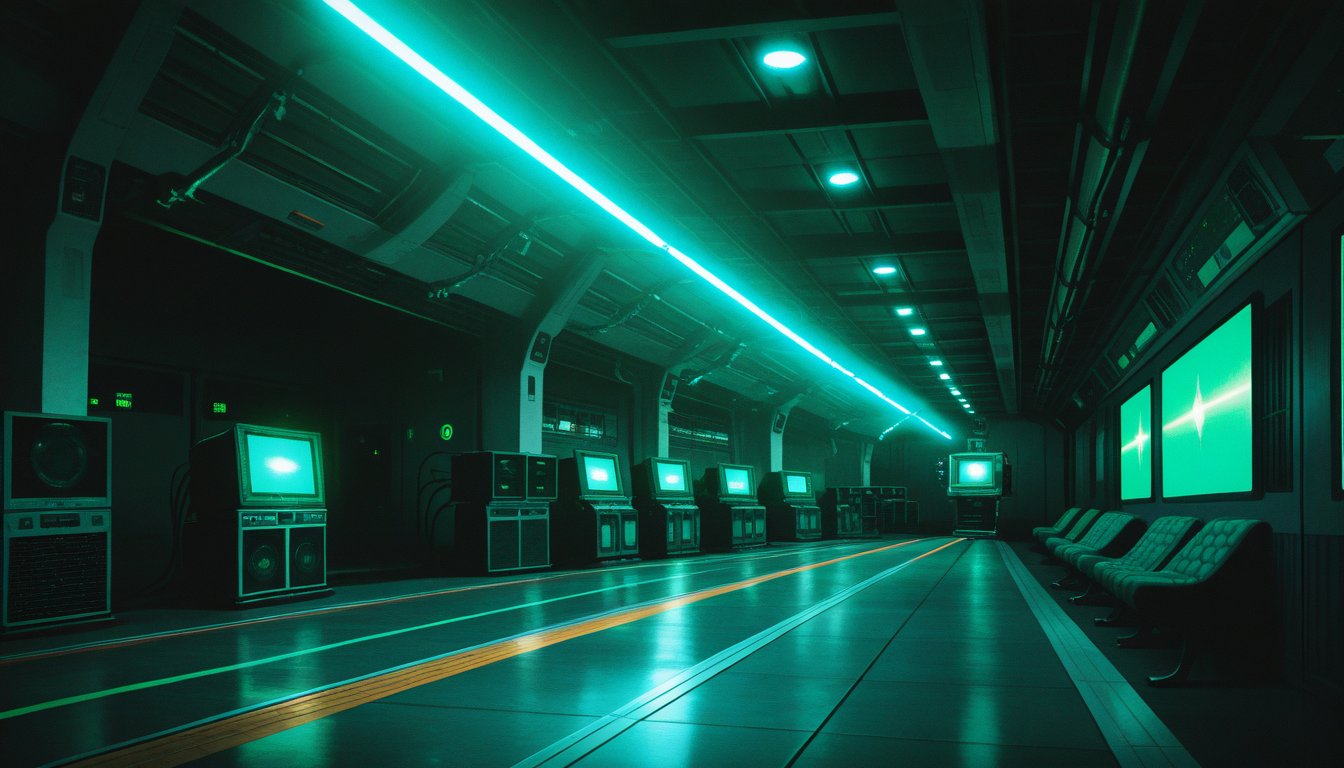
Eleven doors. Eleven nightmares. Twelfth Legion Picture House calls it an anthology; call it a single argument wearing eleven costumes.
Deadtime Stories, the new feature-length collection from former Fleet combat engineer turned director Kai Droberg, stitches together short horror films under one premise the marketing never quite says out loud: the monster is never the stranger. It is always the one who was supposed to love you.
Consider the architecture. A father who feels the lupine thing rising in his own blood, fighting to stay human long enough to protect the family he will soon no longer recognize as his own (‘The Changing Father’). A son who discovers the thing behind his father’s eyes answers to no name he knows (‘Not My Father’s Face’). A boy who climbs into a forbidden attic and finds the lie his mother has been feeding him since his sister died (‘The Attic Clause’). Even the children’s comfort-automaton in the final segment — soft-bodied, built to soothe — turns out to be carrying something that wants them dead. The toy box is not innocent. Neither is the father. Neither, in the collider segment, is the institution that tore the breach open in the first place, chasing knowledge past the point where caution still applied.
This is not accidental. Across six decades of frontier settlements and colony stations learning, slowly, that the people and systems built to protect them are the first place real danger hides, horror has become the genre willing to say what prestige drama rarely does: the guardian figure is not above suspicion merely for being a guardian. ‘Shelter Protocol’ makes the point crudest — a refuge stocked with supplies, and the real threat waiting inside, not outside with the dead. ‘Trespass’ and ‘The Quiet Wood’ do it more quietly, with hunters and starving sons walking into land that was marked forbidden by someone who knew exactly why and said nothing honest about it.
I’ll admit the cognition-assisted render work troubled me going in. Machine-dreamed viscera has a way of feeling weightless, decorative — fear without consequence. But the anthology format saves it: eleven short, hard swings mean no single effect has to carry the philosophical load alone. The wound is in the structure, not the texture. ‘The Second Interview’ is the cleanest proof — no creature, no transformation, just a hitman sitting across from a man who knows too much, and the slow understanding that the room itself was never a job at all. That is the collection’s real monster, present in every segment whether furred, mirrored, or stuffed with foam: the trusted enclosure that was, the whole time, a trap with good lighting.
Entertainment is the delivery mechanism. The argument underneath is older than any of these eleven stories and will outlive the render engine that drew them: question the thing that calls itself safe.