
I’ve hauled ice to seventeen stations that didn’t exist on any official chart. You learn to stop being surprised. What you don’t stop being is curious.
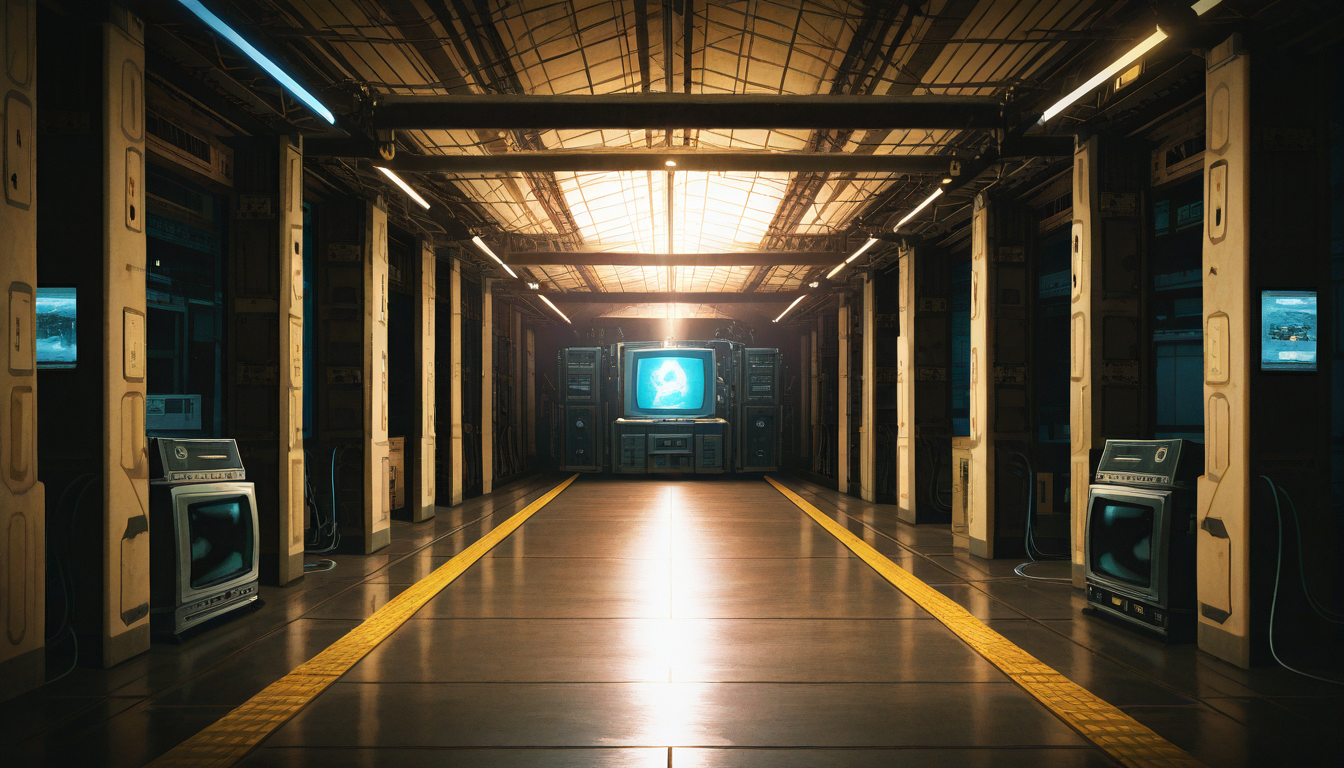
Last cycle, a salvage crew working the Kessel Corridor reported something that didn’t fit their mental model: a fully pressurized, self-sustaining habitat ring, approximately four hundred meters diameter, oxygen recyclers running clean, water reclamation at 94% efficiency, fabrication bays stocked and operational. No distress beacon. No registration transponder. Nobody home — but clearly, somebody had been. And before them, somebody had built.
The Interstellar Assembly called it “anomalous infrastructure.” The Solar Defense Compact called it a “potential security concern.” The Terran Intelligence Bureau reportedly opened three separate investigations, which means they have no idea either but want you to think they’re in charge of whatever this is.
Here’s the thing about ghost stations — they keep appearing. Thirty-seven confirmed in the last eighteen months. All self-sustaining. All architecturally distinct. All built to a standard of quality that puts Assembly-commissioned habitats to shame. One of them, the one they’re calling Caelum-7, has a thermal regulation system that the engineers at Kepler Shipyards said they’d “never seen executed at that efficiency outside a military black budget.”
No black budget. No budget at all, as far as anyone can determine.
Look, I spent a year in Naval intelligence before they decided I was too honest to keep around. I know what a military project smells like. I know what a corporate operation smells like. Neither smell is present here. What I’m detecting — and I say this as a man who has been wrong before, expensively — is the smell of people doing something because they wanted to.
Voluntary exchange. Voluntary construction. Voluntary civilization.
The economics of it is what fascinates me. These stations weren’t built for profit in any conventional sense. They were built for use. Frontier settlers. Haulers running routes that don’t appear on official manifests. Small operators who can’t afford a berth at a registered station and would rather not fill out the seventeen forms the Colony Administration requires just to dock. Someone looked at that market — the invisible market, the one the Assembly doesn’t count because it can’t tax it — and built for it.
Ayn Rand wrote, back when Earth was still figuring out what it wanted to be, that the moral justification of capitalism isn’t efficiency or productivity. It’s that it’s the only system consistent with treating human beings as ends in themselves, not means to someone else’s ends. I’ve never read a sentence that rang truer on a cargo run at three in the morning with ice sublimating off the hull and a deadline I was going to miss anyway.
The people building these stations aren’t waiting for permission. They’re not filing environmental impact assessments with the Galactic Ecological Sustainability Bureau. They’re not seeking designation as Approved Infrastructure Partners under the Assembly’s Frontier Development Initiative, which I remind you has spent 400 billion SGC in twelve years and built exactly nine functional stations, two of which immediately developed structural anomalies.
The real question is: why is this the mystery?
The Assembly is baffled that humans, without supervision, are building things of beauty and utility for each other. The TIB is investigating the possibility that someone is doing something productive without filing paperwork. The GCB is reportedly “monitoring the economic implications” of infrastructure that didn’t require a prime lending rate adjustment to exist.
Same rules for everyone. That’s what these builders seem to believe. You need a place to breathe out here, I’ll build you one. You have something I need, we’ll trade. Nobody asks permission. Nobody holds a gun to anyone’s head. The habitat gets built. People get warm.
Who’s trying to control who here?
I don’t know who the architects of the ghost stations are. I hope I never find out, for their sake. What I know is this: whatever system produced them — that patient, anonymous, voluntary generosity operating at the edge of everything — that’s the unknown ideal. It’s not unknown because it’s mysterious. It’s unknown because the people who write the history books work for the Assembly, and they can’t figure out how to take credit for it.
The stations keep appearing. The investigations keep failing. And somewhere in the deep black, someone is running conduit and thinking about airflow and wondering if the recyclers will need maintenance before the first occupants arrive.
That’s not a bug. That’s the design.