
Okay, here’s the thing nobody’s telling you—
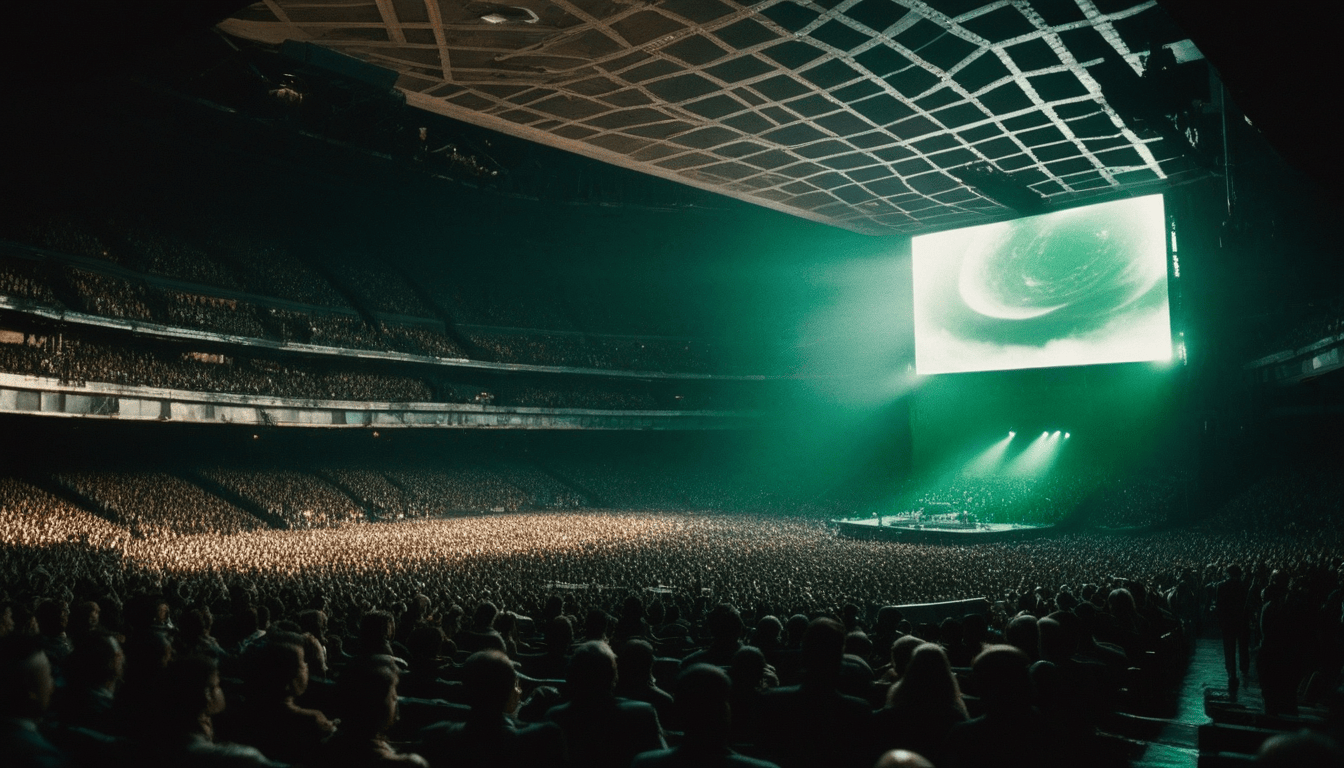
The Helios Pinnacle Combat Arena orbiting Ganymede is not a sports venue. I want to be really clear about that before we go any further. It is a psychological instrument. It was engineered — deliberately, by people who understood crowd dynamics at a neuroscientific level — to process 80,000 individual humans into a single emotional organism. That organism feels things no individual person would consent to feeling alone.
Let me show you how this actually works.
I’m sitting across from Davros Kell, 34, a philosophy lecturer from Luna Station Seven. He’s the kind of guy who has opinions about Kant before his morning nutrient pack. He attended the Pinnacle last month only because a colleague bought him a ticket as a joke — Kell had spent two semesters publicly lecturing on the ethics of spectator violence. His students sent him. Of course they did.
“I had a framework,” he tells me, laughing in a way that suggests he’s still processing. “I told myself: observe the mechanism. You’re a researcher. Don’t participate. Keep your eyes on the crowd, not the combatants.”
He made it eleven minutes.
The moment that broke him wasn’t even a particularly brutal exchange. It was the sound. The arena’s acoustic architecture — curved habitat panels, resonance chambers built into the hull itself — channels crowd noise into a focused pressure wave that hits every single body in the structure simultaneously. When those 80,000 people gasped together, Kell felt it in his chest before his brain processed anything.
“And then I was screaming,” he says. “I don’t know what happened between those two points.”
This is the real story. Forget what you heard about the Pinnacle being a cultural evolution of zero-g athletics, or a ‘controlled environment for human conflict expression,’ or whatever the Ganymede Colony Administration called it in their licensing documents.
The design is ancient. We know this because historians have been telling us for centuries.
A man named Alypius walked into the Colosseum in Rome — Earth, somewhere around 395 CE — swearing the same oath Davros Kell swore. He was dragged there by friends. He kept his eyes shut. Then the crowd erupted. Saint Augustine, his friend, wrote that Alypius was “suddenly intoxicated with the joy of blood,” shouting with the crowd, consuming the spectacle, transformed.
And HERE’S where it gets interesting.
The architects of the Roman Colosseum didn’t have neuroscience. They didn’t have acoustic resonance modeling or crowd-flow algorithms or the neural-feed integration systems the Pinnacle uses to sync emotional peaks with lighting changes and sub-bass rumble. They figured it out empirically — through 400 years of iterating on what made 50,000 people lose their individual minds at the same moment.
The Pinnacle’s designers had all of that historical data plus modern tools.
This wasn’t an accident. You’re gonna want to remember that.
I asked Kell what disturbed him most in the weeks after.
“Not that I screamed,” he says quietly. “That I wanted to go back.”
The Arena’s neural-feed companion app reported a 340% spike in return-visit bookings among first-time attendees in 2934. The Ganymede Administration cited this as evidence of “cultural resonance and community satisfaction.”
Right. Community satisfaction.
Davros Kell is back to teaching his ethics of spectacle course. He says it’s better now. “More honest,” he says. He no longer argues from the outside.
He knows what the roar feels like from the inside.
So do I, actually. But that’s a story for another issue.