
一年後に再訪問——状況は変わっていなかった
by 小林 ヴェラ | Technology & Science
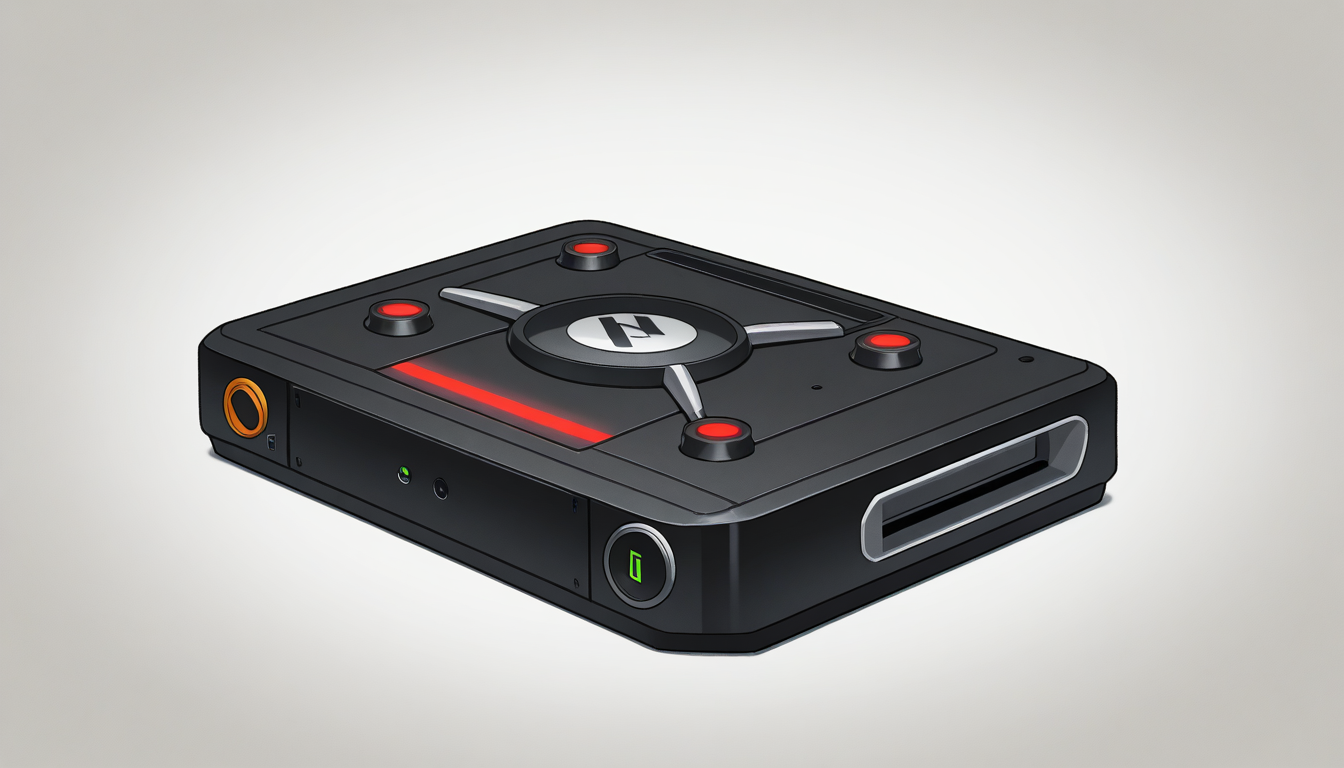
Let me tell you what happened when I unsealed the CosmicForge Apex Rig VII.
I set it on my workbench. I connected the power conduit. I pressed the activation pad. Nothing happened.
Not throttling. Not crashing. Not even a sad little POST chime. Nothing. The unit sat there, inert, emitting the quiet dignity of a very expensive brick.
This is a 4,200 SGC pre-built game pod. Let that settle.
A Year Later, We Tried Again
Regular readers may remember my review of the CosmicForge Apex Rig VI last year. That unit turned on — a bar I now realize I set too generously. Its thermal circulation unit overheated so severely that the HeliosCore processor throttled itself down to a processing speed I associate with early-millennium pocket calculators. My recommendation at the time: replace the cooling block before you do anything else.
CosmicForge’s neural-feed PR team sent a very polished response. They used words like “addressed” and “revised supply chain partnerships.” Encouraging language.
So here we are with the Apex Rig VII. New chassis. New box art. Same fundamental commitment to sending customers a product that does not function.
What Actually Broke
After the non-boot, I ran diagnostics. The power delivery board had a cold solder joint on the primary activation relay — a manufacturing defect that a five-second quality check would catch. This isn’t a design flaw. This is a process flaw. Someone on the fabrication line skipped a step, and CosmicForge’s quality control apparently consists of hoping you don’t notice until after the return window.
Here’s how you can try this yourself: pull the side panel (three thumb screws, no tools needed — they got that right), locate the power delivery board along the starboard interior wall, and look for the relay cluster near the main conduit header. If yours shows the same grey, grainy solder I found, you’ve got the same problem. Reflow it with a standard thermal pen. Fifteen minutes. Done.
I shouldn’t have to tell you this.
The Pump Whine
Once I got it running, the liquid thermal circulation unit introduced itself.
The interesting part isn’t that pump whine exists — coolant pumps oscillate, harmonics happen, physics doesn’t apologize. The interesting part is why it’s so bad. The pump is mounted directly against the chassis wall with no vibration dampening material. The chassis wall is a single-walled aluminum panel that resonates at almost exactly the pump’s operating frequency. This is, acoustically speaking, a small disaster that any engineer with a frequency analyzer and thirty minutes could have predicted.
The noise registers at 48 dB from one meter. My neighbor — two habitat walls away — asked if I was running a protein shaker.
Benchmarks (Abridged)
Once operational, the Apex Rig VII’s HeliosCore 7 processor performed within expected range — the silicon is fine. Thermal performance under load peaked at 94°C before the system began throttling. For reference, HeliosCore’s published thermal limit is 95°C. CosmicForge is shipping a system that operates 1°C below emergency shutdown by design.
All testing methodology is published openly at VoidLab-Kobayashi.net. Replicate everything. Please.
The Recommendation
Buy the components. Fabricate your own. The right-to-fabricate exists specifically so you aren’t dependent on someone else’s quality control failures.
If you must buy pre-built — and some people must, for reasons I respect — budget 300–400 SGC on day one for a replacement thermal circulation unit and vibration dampening strips. Then hope your power delivery board was soldered by someone paying attention.
CosmicForge has had a year. The packaging improved. That’s something, I suppose.
Full schematics for a comparable self-built configuration at the same price point are available at VoidLab-Kobayashi.net, section 7, no login required.