
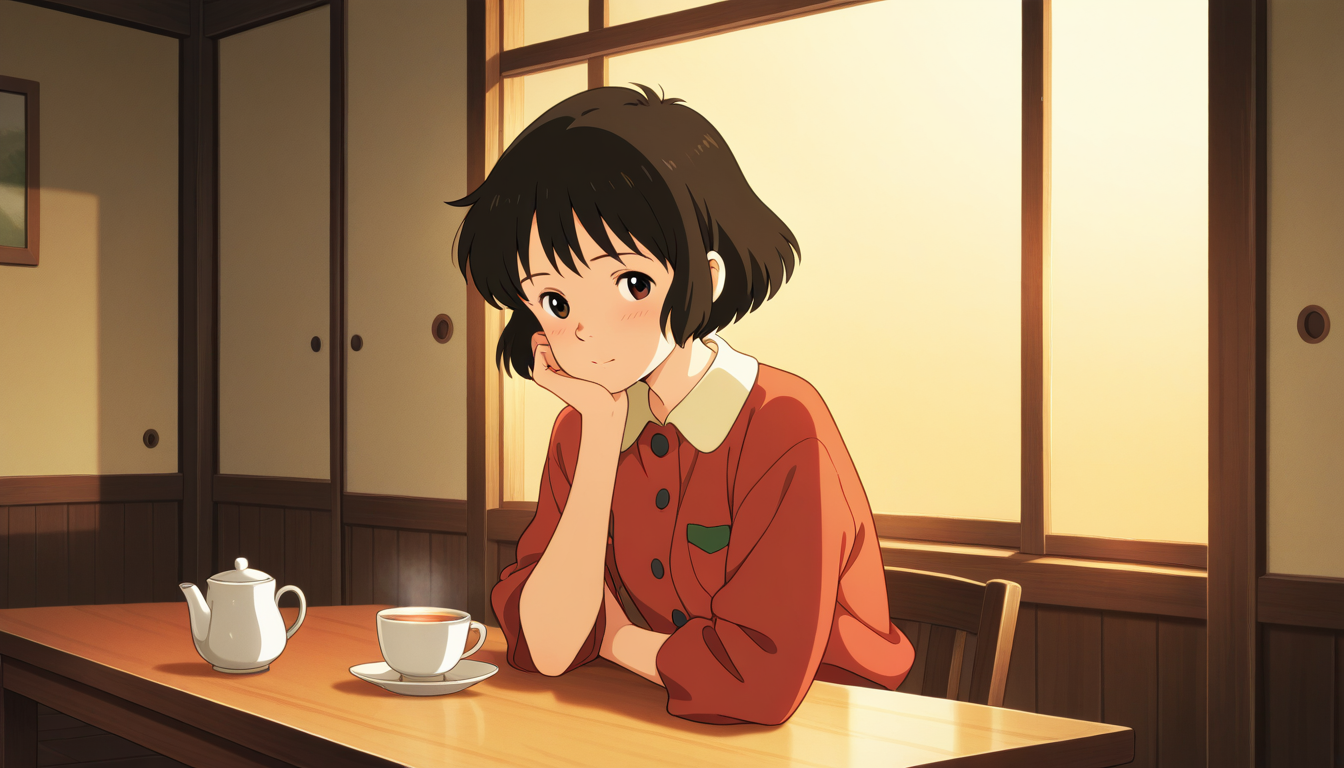
The Radical Case for Doing Absolutely Nothing
by ソフィア 中村, Human Interest & Lifestyle Editor
Her name is Dawa. She lives in a mid-tier hab unit on Callisto Station, works a fabrication shift, comes home, and sometimes — her words — just sits there.
She poured tea while she explained, looking slightly embarrassed, like she was confessing to something.
“I don’t play anything. I don’t queue a neural feed. I don’t open my mobi. I just… look at the wall for a while.”
She paused.
“Is that strange?”
I told her that back home, we’d just call it existing. She looked at me like I’d said something profound.
Somewhere in the last century, the gap between one thing and the next thing got filled. Waiting for the transit pod used to mean nothing — a small pocket of useless time. Now your mobi device detects the pause and serves you content before you’ve consciously registered that you’re bored. The platforms — NovaPulse, VoidScroll, whatever replaced them this quarter — are engineered by people whose entire function is to ensure you never reach the wall.
The wall, it turns out, is important.
I’ve been asking neuroscientists, settlement counselors, and ordinary people across the Core Systems about this for three weeks now. The picture they paint is surprisingly consistent: 静寂 — seijaku, stillness — is not emptiness. It is processing. The brain, left alone, does not idle. It integrates. It makes meaning from the day’s noise. It remembers who you are when nobody’s watching.
Dr. Emre Yıldız, a cognitive researcher at Ganymede Institute who studies what he calls “attentional debt,” put it plainly:
“We are running at a stimulus deficit that we’re borrowing against our own interiority. People don’t know what they think anymore because they never give themselves conditions to find out.”
I asked him who told him to study this.
He laughed. “Nobody. Honestly, nobody wanted to fund it. Doesn’t sell anything.”
They figured it out together — him and two colleagues, a shared hab desk, no institutional mandate. Nobody told them to.
The content industry — and it is an industry now, as formal as ore extraction — operates on one elegant principle: every moment of your discomfort is a revenue opportunity. Boredom is a problem to be solved. Solitude is a bug. The gap between you and the next thing is a wound that NovaPulse will heal, for free, forever, in exchange for your attention and everything that attention reveals about you.
Dawa put the tea down.
“I started noticing that when I didn’t fill the quiet, thoughts would come. Real ones. Not like… thoughts I was supposed to have. Just mine.”
This is what it actually looks like when a person trusts themselves.
She figured out what she was bothered by. She figured out what she actually wanted for dinner, not what her nutrition profile suggested. She sat with a decision she’d been avoiding and it resolved itself without a productivity app or a wellness consultant or a premium neural coaching subscription.
She stared at the wall. The wall gave her herself back.
I asked Dawa if she had advice for people who wanted to try this.
She thought about it for a long time.
“Leave your mobi in the other room. Don’t do it because someone told you to. Just… see what happens when nothing is happening.”
Simple. A little frightening. Completely free.
Back home, we have a word for the practice: ma — 間. The pause between sounds that gives music its shape. The empty space that makes the room.
We never really stopped doing it.
I wonder when everyone else did.