
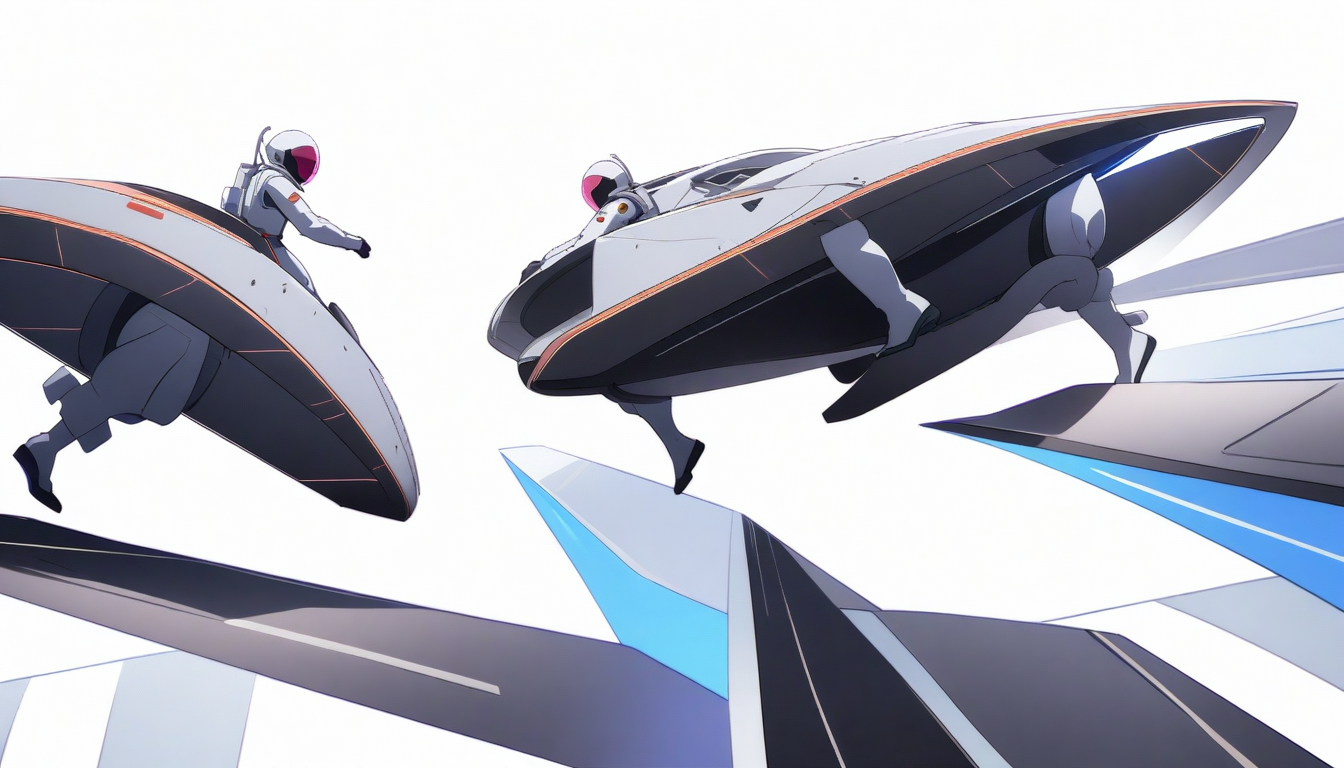
The Ceres Exchange buzzed last quarter when Aurora Entertainment announced a 340% profit spike from their zero-gravity racing leagues. Turns out watching people flip through vacuum sells premium advertising slots to pharmaceutical corps and luxury fabricators.
Funny thing about zero-G sports - they didn’t start as sports. Three decades back, asteroid miners developed these movement techniques to survive equipment failures in hard vacuum. Now those same maneuvers get broadcast across the Core Systems as “thrilling athletic competition.”
The manifest doesn’t match the cargo, as usual.
Take the Titan Racing Circuit. Entry fee: 50,000 SGC. That buys you a custom pressure suit, training time in Aurora’s orbital facilities, and medical coverage for when things go wrong. Compare that to a frontier worker’s annual salary - 12,000 SGC if they’re lucky.
Aurora’s marketing feeds emphasize the “democratic nature” of zero-G competition. “Anyone can defy gravity,” their latest campaign promises. They don’t mention the insurance requirements. Participant liability coverage starts at 200,000 SGC. Most frontier settlements operate on budgets smaller than what these athletes risk on weekend races.
The economics get interesting when you follow the supply chain. Those custom suits? Manufactured in orbital factories using patents originally developed for emergency EVA gear. The training facilities? Converted cargo modules that used to transport mining equipment to the Belt.
Free market innovation, they call it. Taking tools designed for survival and repackaging them as luxury entertainment. The original miners who developed these techniques see none of the profits.
Meanwhile, actual working conditions in zero-G haven’t improved much. Asteroid miners still use decades-old safety equipment while sports enthusiasts get the latest pressure suit innovations. That’s one version of events - the version that doesn’t appear in Aurora’s investor reports.
The Interstellar Assembly recently proposed regulations for zero-G sports safety standards. Aurora’s lobbyists pushed back, citing “innovation concerns” and “market freedom.” Translation: safety costs money, and regulated sports generate smaller profit margins.
Interesting how frontier workers’ daily reality becomes Core System entertainment. The same maneuvers that miners use to survive equipment failures become “extreme athletic challenges” when wealthy participants pay for the experience.
Nobody ever asks what it costs to enforce artificial scarcity in a post-scarcity economy. The technology exists to make zero-G training accessible to any frontier settlement. The fabrication specs for pressure suits could be open-source tomorrow.
Instead, Aurora Entertainment holds the patents and charges premium rates for access to techniques that originated from necessity, not sport.
The real question isn’t whether zero-G racing makes good entertainment - it’s why survival skills developed by working people become luxury commodities for the wealthy.