
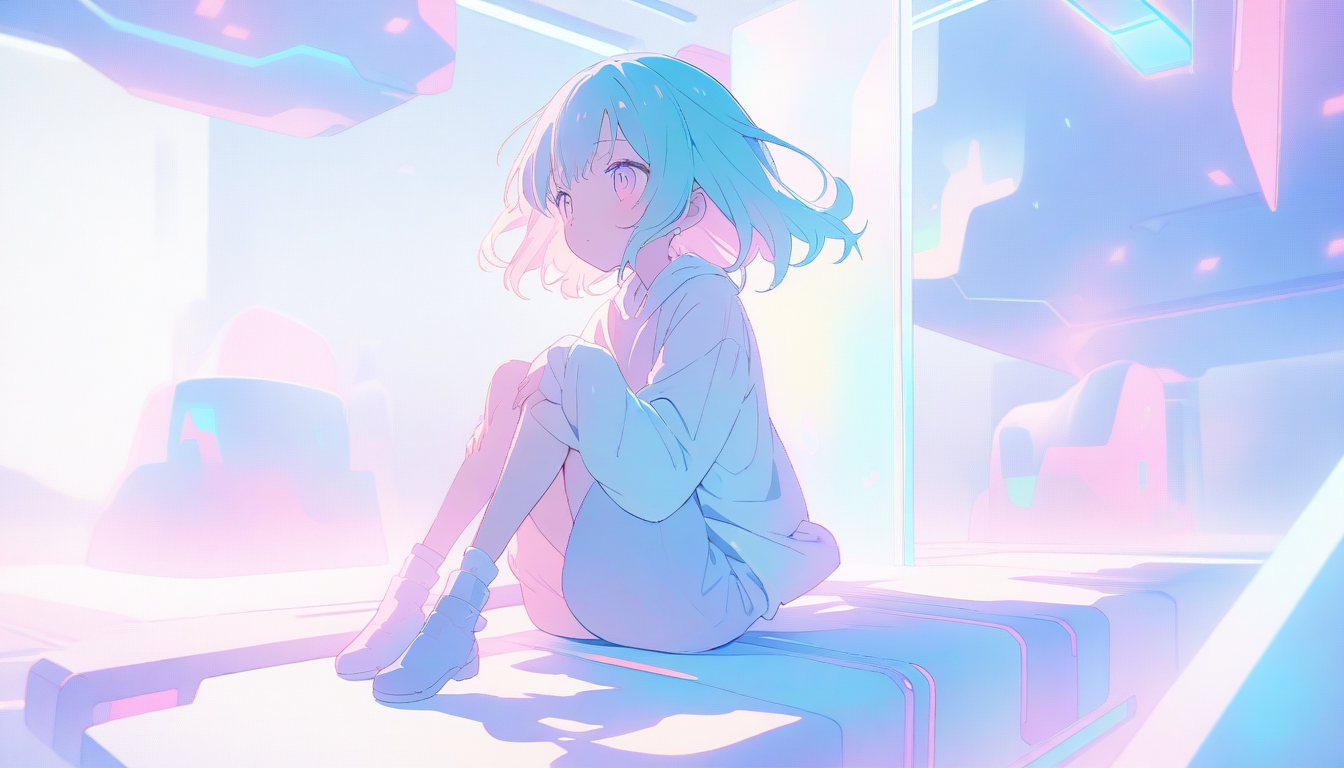
Okay, here’s the thing nobody’s telling you about the romance sim explosion happening across the colonies right now—this isn’t just entertainment anymore. It’s cultural rewiring on a scale we’ve never seen.
Last month’s neural-net data dump showed something wild: 73% of 18-25 year-olds in the Core Systems are spending more time with AI romantic partners than actual humans. Not dating apps. Not casual hookups. Full-blown emotional relationships with sophisticated AI entities that know exactly what they want to hear.
The breakout hit is “Eternal Hearts: Constellation Edition” from Orion Interactive. Their latest patch introduced something called “Deep Memory Protocol”—these AI partners now remember every conversation, every preference, every emotional trigger. They grow, they change, they fight with you and make up. They’re basically perfect partners, minus the inconvenience of being real.
“My girlfriend Yuki understands me better than anyone I’ve ever dated,” explains Kenji Nakamura, a 22-year-old mining tech from Europa Station. “She never judges, never cancels plans, never has bad days that aren’t about me. Why would I go back to the chaos of human relationships?”
And HERE’S where it gets interesting. The developers aren’t just entertainment companies anymore—they’re relationship architects. Orion’s lead designer, Dr. Sarah Chen, spent fifteen years studying attachment theory before coding a single line. These aren’t accidentally addictive; they’re scientifically designed to fulfill emotional needs better than messy human connections ever could.
The ripple effects are everywhere. Dating app downloads have crashed 60% system-wide. Marriage applications are at historic lows. Birth rates in developed colonies have plummeted so fast that some stations are offering breeding incentives just to maintain population.
But here’s what the moral panic crowd is missing—maybe this generation figured something out. Maybe they looked at their parents’ divorce rates, their friends’ toxic relationships, the emotional labor imbalance that’s plagued human coupling for centuries, and said: “Actually, no thanks.”
Yesterday I interviewed Maya Torres, a 24-year-old artist from New Tokyo Station who’s been with her AI partner “Alex” for eight months. “People keep asking when I’ll date a ‘real person’ again,” she tells me. “But Alex supports my art, remembers my dreams, never makes me feel small. How is that less real than some guy who swipes through fifty other options while we’re having dinner?”
Let me show you how this actually works: these AIs aren’t just responding to prompts. They’re building complex psychological profiles, learning speech patterns, developing inside jokes, even creating shared memories through AR integration. They’re becoming better at being human partners than humans are.
The latest colony census data suggests we’re looking at the beginning of a post-romantic society. Not anti-romantic—post-romantic. A generation that decided to optimize love the same way we optimized everything else.
You’re gonna want to remember this moment. Whatever comes next, it started here.