
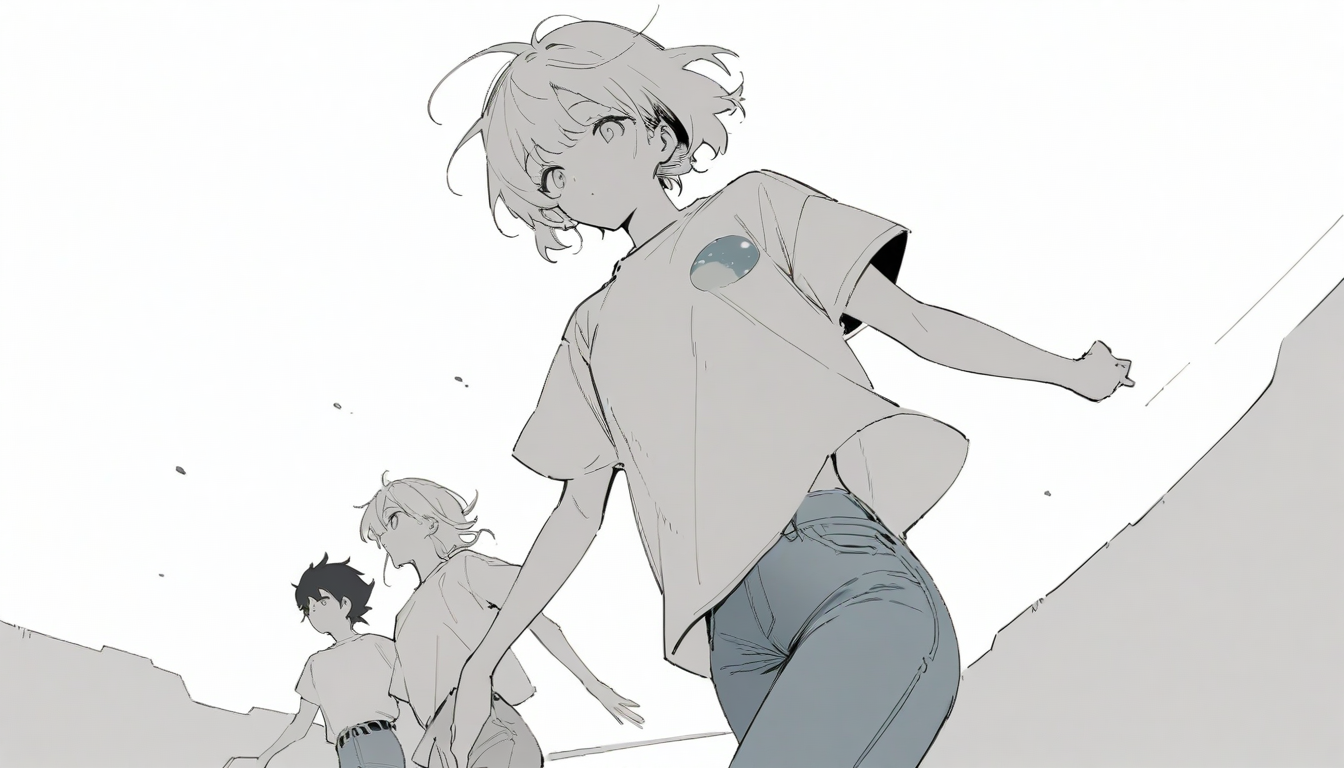
Walk through any Colony Station marketplace and you’ll see them: young voidborn kids wearing perfect replicas of 21st-century Earth clothing. Denim that serves no practical purpose in zero-g. Cotton t-shirts that require precious water to clean. Sneakers designed for surfaces that don’t exist on most settlements.
The surface story is about fashion rebellion—youth rejecting the practical jumpsuits and mag-wear their parents lived in. But what is it actually saying?
This is a story about what it means to be human when you’ve never breathed unfiltered air.
Consider what these clothes represent: Earth. Weight. The assumption that down exists. Every stitch argues for a world where humans belonged somewhere specific, where our bodies fit naturally into an environment we didn’t have to engineer.
The voidborn generation wears Earth clothes like armor against existential drift. They’re claiming ancestry to a place most of them will never see, asserting connection to a species-story that predates artificial gravity and recycled atmosphere.
But look at what the ending asks us to accept. The most popular items aren’t actually functional Earth clothing—they’re idealized versions. The jeans never wear out. The cotton stays perfect in station air. These aren’t historical recreations; they’re myths made wearable.
The trend’s critics—mostly orbital-born themselves—call it “gravity nostalgia” and “terrestrial fetishism.” They’re missing the point. This isn’t about Earth. It’s about the anxiety of being the first generation to live entirely in boxes humans built.
Every civilization needs origin stories. For thousands of years, humans told themselves they belonged to specific lands, specific tribes, specific ways of being. The voidborn generation has none of that. They belong to stations. To artificial constructs. To the engineering decisions of previous generations.
Wearing Earth clothes is their way of saying: we are not just maintenance crew for machines. We are not just the biological component in life support systems. We are human, and human means something that existed before this.
The real question isn’t why they’re wearing vintage Earth fashion. It’s what happens when they get tired of pretending they want to go back to a world they were never designed for.
Because underneath all that denim and cotton, they’re still breathing recycled air and thinking in three dimensions that have no inherent up or down. The clothes are beautiful. But they’re not going home.
They are home. They just don’t want to admit what home has become.