
宇宙の狭さが生み出す新しい美学
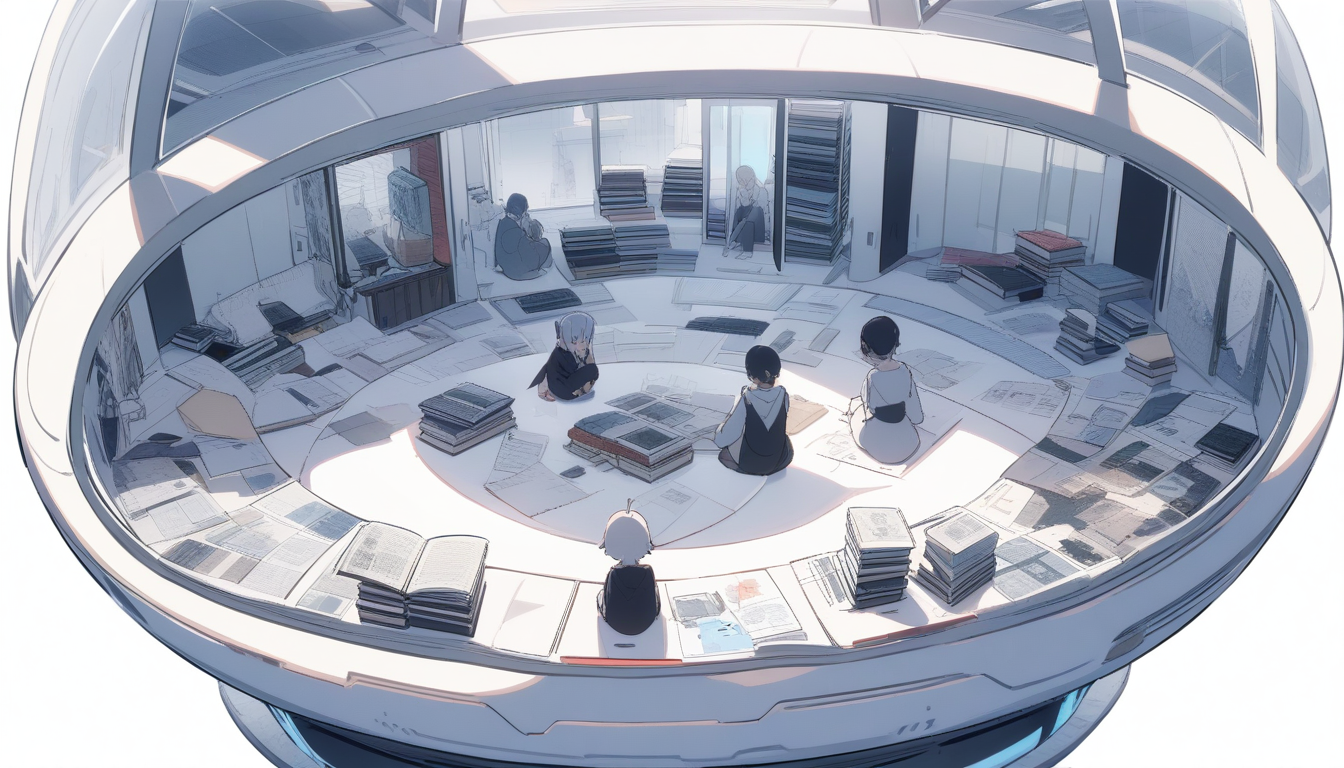
The latest lifestyle transmission from the Outer Rim settlements arrived yesterday: images of families living contentedly in 3x3 meter pods, their possessions reduced to seventeen carefully chosen objects. The aesthetic is being called ma-no-bi - beauty through emptiness.
But what is this trend actually saying?
The surface story is about practical adaptation to space constraints. Shipping costs between systems make every kilogram precious. Colony habitats prioritize life support over living space. Of course people adapt.
The real story is about what we’ve decided human beings actually need.
Look at what the ma-no-bi practitioners choose to keep: one book (physical, not neural-stored), one piece of art (usually handmade), one comfort object (often textiles from Earth). Everything else gets discarded or digitized. They’re not just decluttering - they’re making an argument about the relationship between stuff and souls.
What fascinates me isn’t the minimalism itself, but how these families describe the transition. “We thought we needed all those things,” says Kenji Nakamura, a transport engineer living with his family in a Titan Station micro-unit. “Turns out we needed space to think.”
Space to think. In the smallest living quarters humanity has ever occupied.
This is a story about what it means to be rich. The old Earth definition required accumulation - the more objects you could surround yourself with, the more successful you were. The ma-no-bi movement argues the opposite: true wealth is having so few possessions that each one carries deep meaning.
But look at what the ending asks us to accept. These families aren’t choosing minimalism from abundance - they’re making virtue from necessity. The Outer Rim settlements don’t have enough resources for everyone to own much. Is this philosophy, or is it adaptation to scarcity being rebranded as wisdom?
The children raised in these environments report something interesting: they feel claustrophobic in larger spaces. A 10-year-old visiting the Core Systems for the first time described Earth-standard apartments as “wastefully empty” and “spiritually confusing.” She couldn’t sleep until she built herself a small enclosure in the corner of her temporary room.
What are we teaching the next generation about human needs? That we can be happy with less, or that we should be satisfied with what little we’re given?
The ma-no-bi lifestyle publications never address this tension. They show beautiful images of serene families in pristine minimal spaces, but they don’t ask whether this contentment comes from enlightenment or from having no other choice.
Maybe that’s the point. Maybe the distinction between wisdom and necessity dissolves when you’re living seventeen objects away from the void.
The surface story is about interior design. The real story is about whether human happiness requires material abundance, or whether we’ve been telling ourselves comfortable lies for millennia.
The Outer Rim families seem genuinely content. But what happens when their children have to choose between the beautiful constraint they were raised in and the wasteful abundance available in the Core Systems?
That choice will tell us what ma-no-bi really believes about human nature.