
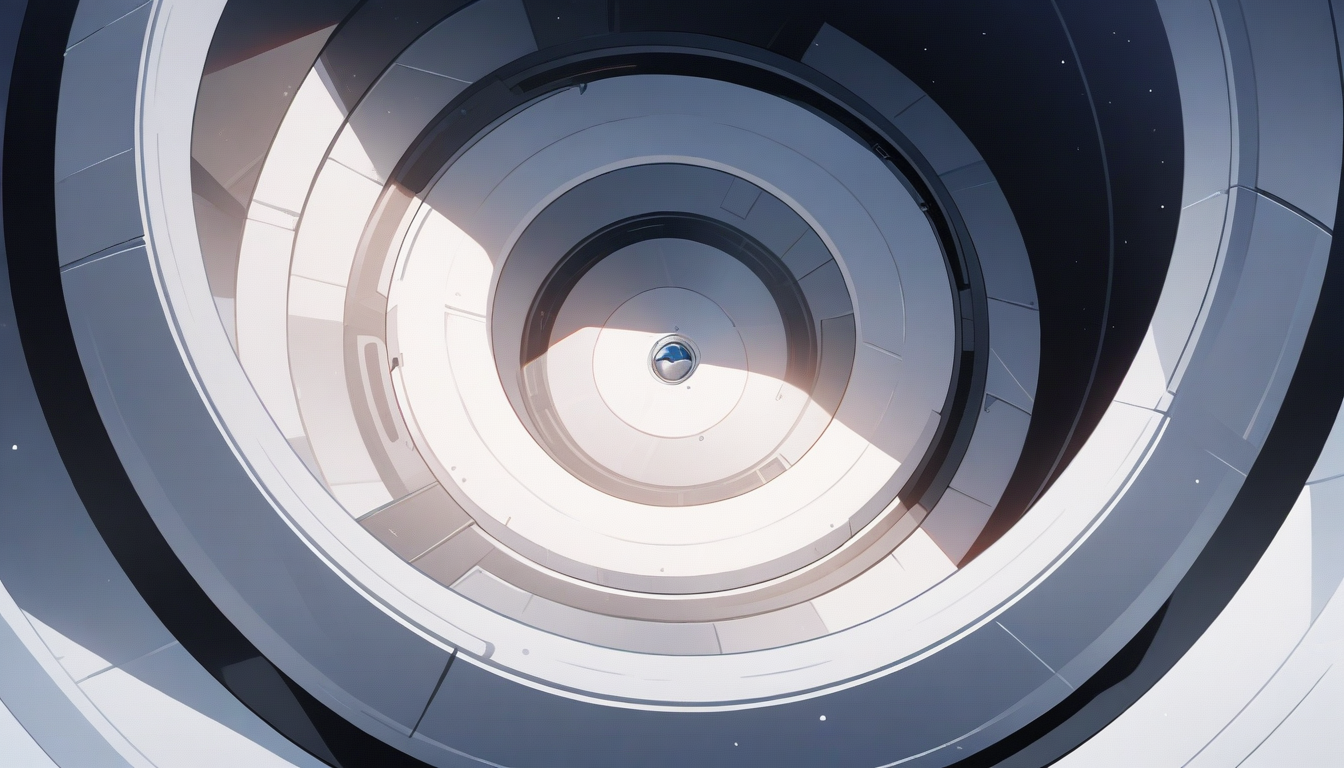
They call it kanso living—the Neo-Minimalist movement sweeping through Core System habitats like a beautiful plague. Walk through any residential pod in Neo-Tokyo Station and you’ll see them: humans reduced to shadows, existing in spaces so empty they echo with the sound of nothing.
But what is it actually saying?
The surface story is about freedom from material burden. Clean lines, neutral tones, possessions that fit in a single storage cube. The marketing feeds whisper of spiritual clarity, of minds unburdened by the weight of things. Look deeper, though. Look at what the ending asks us to accept.
This is a story about what it means to be human—and it’s arguing we should stop.
I spent a week in the Ceres Exchange district, observing the faithful. They move through their pods like ghosts, interacting with surfaces that respond to touch, sleeping on platforms that emerge from walls. Everything temporary. Everything replaceable. Even them.
“I don’t own anything,” Kenji Nakamura told me, standing in what could generously be called his living space. White walls. White floor. A single plant—artificial, naturally. “I rent my clothes, lease my furniture, stream my entertainment. I am free.”
Free from what? I wanted to ask. Free from the coffee cup your grandmother gave you? Free from the book that changed your mind when you were seventeen? Free from the small, ridiculous objects that anchor memory to meaning?
The real story is about erasure masquerading as enlightenment.
Watch how Neo-Minimalists interact with their spaces. No casual touches. No absent-minded adjustments. No evidence they’ve ever lived anywhere. They’ve optimized themselves out of existence, become perfectly interchangeable units in someone else’s efficiency equation.
The movement’s prophet, Dr. Yuki Sato, preaches from her own empty cube about “conscious relationship with objects.” But consciousness requires connection. It requires the friction of history, the weight of choice, the beautiful inefficiency of caring about things that don’t maximize anything except the fullness of being alive.
“Attachment is suffering,” she says, quoting ancient wisdom stripped of context.
But what if attachment is also love? What if the messy accumulation of objects—photographs, gifts, impulse purchases, inherited treasures—is how we build the story of who we are?
The villain believes we can perfect ourselves through subtraction. The movement agrees more than it admits. Look at their social feeds: identical pods, identical poses, identical emptiness. They’ve achieved what they sought—complete freedom from the burden of individuality.
In the end, Neo-Minimalism isn’t about living with less. It’s about living as less. And in a universe where human consciousness is already fragile, where we’re scattered across impossible distances, where connection requires constant effort—perhaps the last thing we need is another philosophy telling us to disappear.
Some burdens are worth carrying. Some attachments are worth keeping. Some spaces should echo with evidence of the lives lived within them.
Otherwise, what exactly are we trying to preserve out here among the stars?