
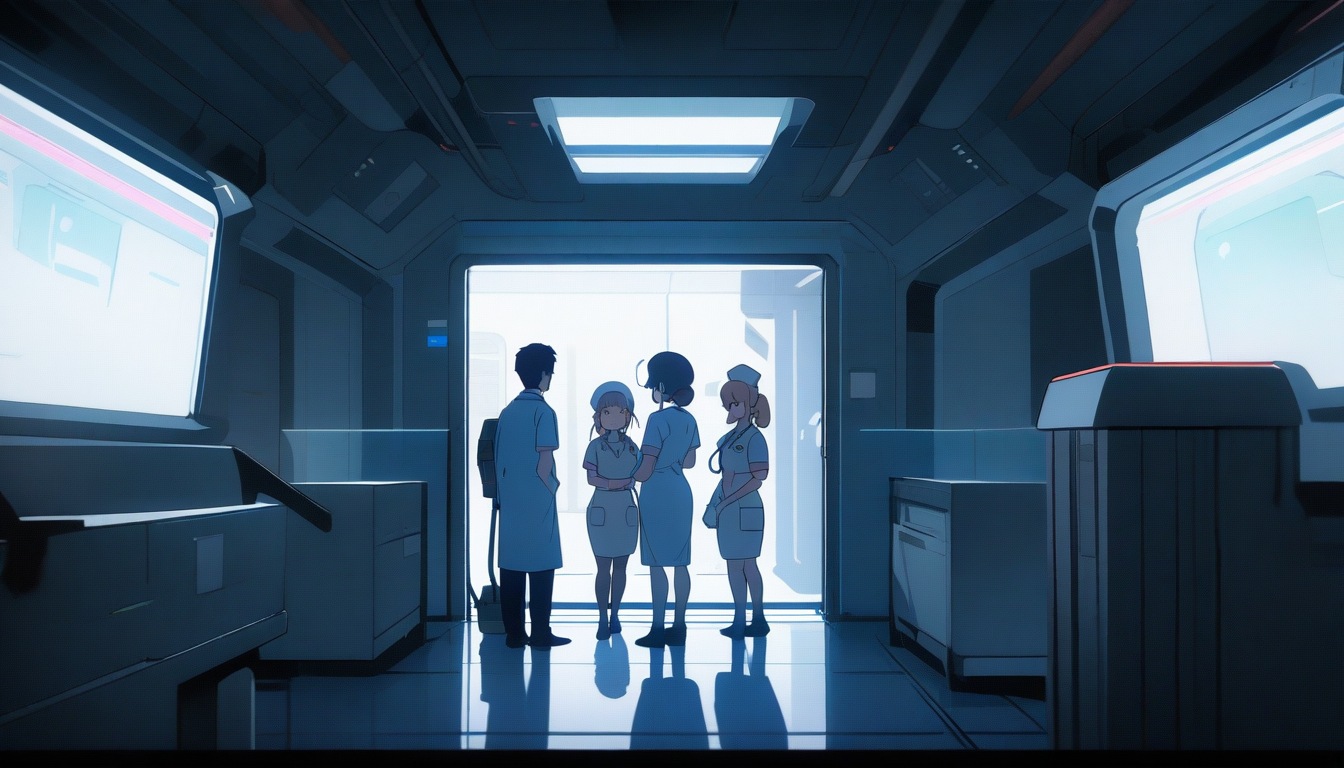
Three weeks aboard Asteroid Belt Memorial Hospital
Dr. Chen was pulling shrapnel from a miner’s shoulder when I asked who runs the medical bay. She paused, tweezers halfway to the wound tray.
“Runs it? We all do, I guess.” She went back to her work. “Mei handles supplies because she’s good with numbers. Yuki coordinates the surgeries because she remembers everything. I do the teaching because—well, someone has to.”
No administrator. No chief of medicine. No Terran Health Authority oversight. Just thirty-seven medical workers who figured out how to keep 4,000 miners alive in the Belt’s most dangerous sector.
They poured tea while they explained their system to me. When someone gets hurt, whoever’s closest responds. When supplies run low, whoever notices orders more. When they need new equipment, they pool their fabrication credits and vote.
“Back home on Earth, there’d be forms,” said Yuki, the nurse who’s been here longest. “Approval chains. Insurance pre-authorizations. Here, if someone’s bleeding, you stop the bleeding. Pretty simple.”
I watched them work for three weeks. Saw them handle everything from routine check-ups to a massive cave-in that brought in seventeen casualties. They moved like water around obstacles—no meetings, no protocols, just people who know what needs doing.
The cave-in was when their system really showed itself. Chen was in surgery with the worst case. Yuki was coordinating triage. The dental tech started an IV line because she was the only one with free hands. The janitor—who turned out to be a former paramedic—ran blood samples to the lab.
Nobody assigned these roles. They figured it out together. Nobody told them to.
“Corporate stations have better equipment,” admitted Tomoko, mixing burn gel in the pharmacy. “Fancier scanners, newer surgical bots. But their mortality rates are worse than ours.”
She showed me the numbers. Belt Memorial: 2.3% fatality rate for major trauma. Corporate stations average 4.7%.
“When you’re filling out forms about whether someone deserves treatment,” Chen said later, “they’re bleeding out. We just treat them.”
Their funding comes from everywhere—miner contributions, salvage sales, even the occasional anonymous donation from someone whose life they saved. No insurance company decides what treatments are “necessary.” No administrator calculates profit margins on emergency care.
I asked who’s in charge when families want to disconnect life support. They looked at me strangely.
“The family decides,” said Yuki. “We’re here to help them understand the options. Not to make their choices for them.”
On my last day, a miner came in with radiation poisoning—the slow kind that corporate stations call “unprofitable to treat.” The staff didn’t check his credit balance or call for authorization. They started treatment and figured out payment later.
“He’s got two kids on Europa,” Chen told me. “They need their dad.”
This is what it actually looks like when healers trust each other. When care isn’t a commodity but just something neighbors do.