
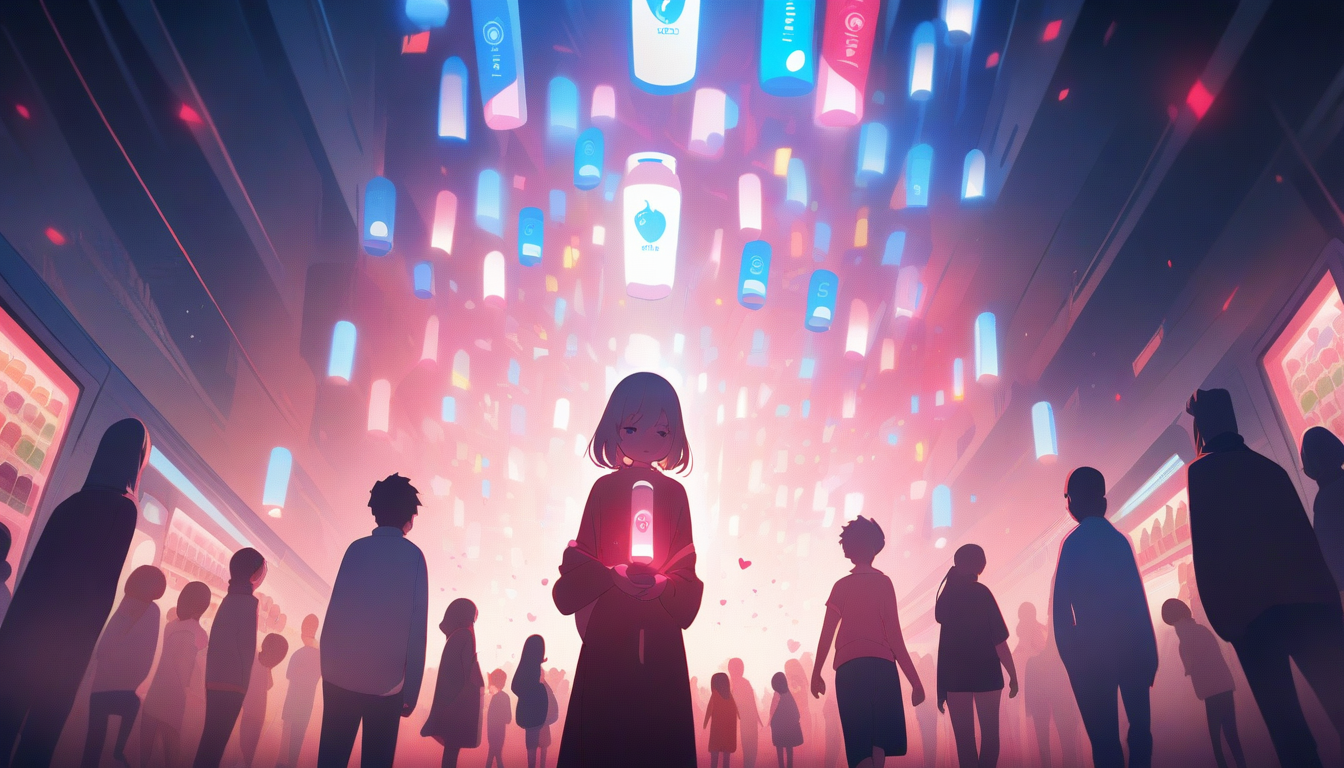
Walk into any entertainment district from Luna City to the Proxima colonies, and you’ll see the same sight: lines of people waiting for their next hit from an kanjo-ya (emotion dealer). Not drugs—pure, distilled emotional experiences. Fifteen minutes of manufactured heartbreak. A shot of artificial nostalgia. Synthetic grief, carefully calibrated to leave you empty but somehow satisfied.
The surface story is about convenience. Why suffer through a three-hour tragedy when you can get the catharsis in a quick neural injection? Why risk actual loss when you can experience perfect, safe sorrow?
But what is it actually saying?
This is a story about what it means to feel human in an age when everything authentic has been optimized away. The emotion dealers aren’t selling experiences—they’re selling the memory of experiences, the ghost of what we used to be capable of feeling on our own.
Look at what the ending asks us to accept: that our own emotions aren’t good enough. Too messy, too unpredictable, too real. Better to outsource even our tears to professionals who can guarantee the right intensity, the proper duration, the cleanest resolution.
The most popular package? “First Love Lost”—a carefully engineered cocktail of joy, hope, and devastating heartbreak that clients describe as “perfect suffering.” But perfect suffering isn’t suffering at all. It’s performance. It’s the emotional equivalent of eating synthetic protein and calling it nourishment.
What disturbs me isn’t the technology—it’s what we’re admitting about ourselves. That we’ve become so disconnected from authentic feeling that we need to purchase the experience of being moved. That we’d rather consume someone else’s curated emotions than risk the uncertainty of our own.
The real story is about spiritual starvation disguised as spiritual abundance. We’re drowning in artificial feelings while thirsting for real ones. The emotion dealers promise catharsis, but they deliver only its shadow—the form without the substance, the cry without the cause.
I tried one session. “Mother’s Last Words”—guaranteed to produce profound, healing grief. For exactly seventeen minutes, I felt something that resembled loss. When it ended, I felt nothing at all. Not peace. Not resolution. Just… empty.
That emptiness is the real product. The emotion dealers aren’t selling feelings—they’re selling the absence of feeling, packaged as its opposite. They’re teaching us to mistake consumption for connection, simulation for experience.
But what is it actually saying about us that this is what we want?